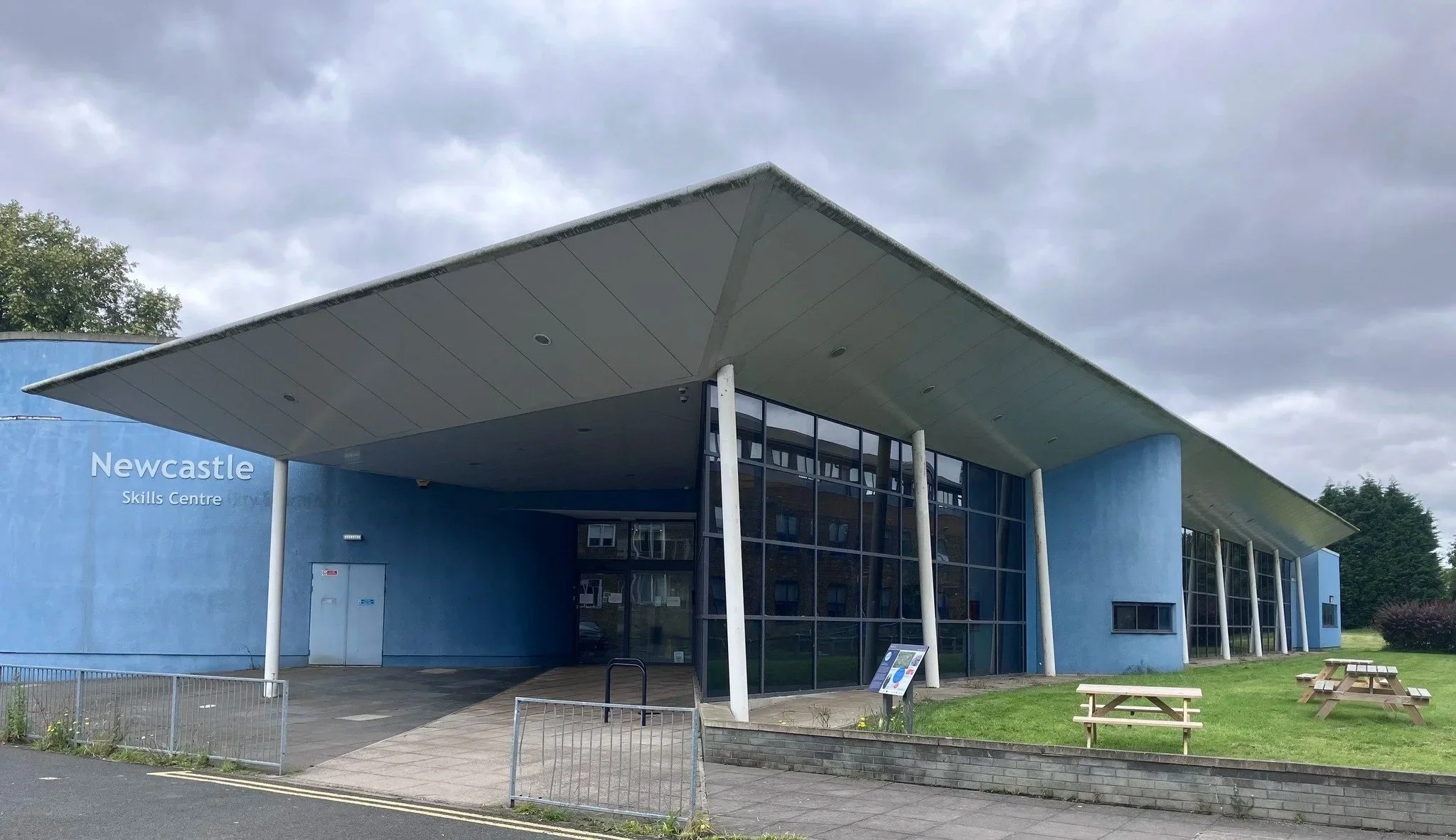
Newcastle Skills Centre (Westgate College) - Heating and Ventilation Refurbishment Design
Reimagining ageing building services through smarter, sustainable design.
Client: Newcastle City Council
Scope: End-to-end building services survey, design, and procurement support for the refurbishment and upgrade of heating and ventilation systems throughout the building.
12% Cost Reduction
Achieved through intrusive surveys and intelligent retention of existing infrastructure
Reduced Embodied and Operational Carbon
Upgraded services without disrupting day-to-day operations.
Live Building Refurbishment
Delivered through reuse, hybrid low-carbon systems, and efficient design
The Inspiration
Across local authority estates, building services quietly determine how safely, efficiently, and reliably public buildings operate every day. As systems age, the challenge is rarely just replacement, it is how to modernise without unnecessary waste, disruption, or loss of value in infrastructure that still performs.
For Newcastle City Council, this meant rethinking an ageing building services installation that was no longer efficient, maintainable, or supported by like-for-like components. The ambition was not wholesale replacement, but a smarter, future-ready upgrade that improved performance while strategically retaining and enhancing viable existing infrastructure.
Our Approach
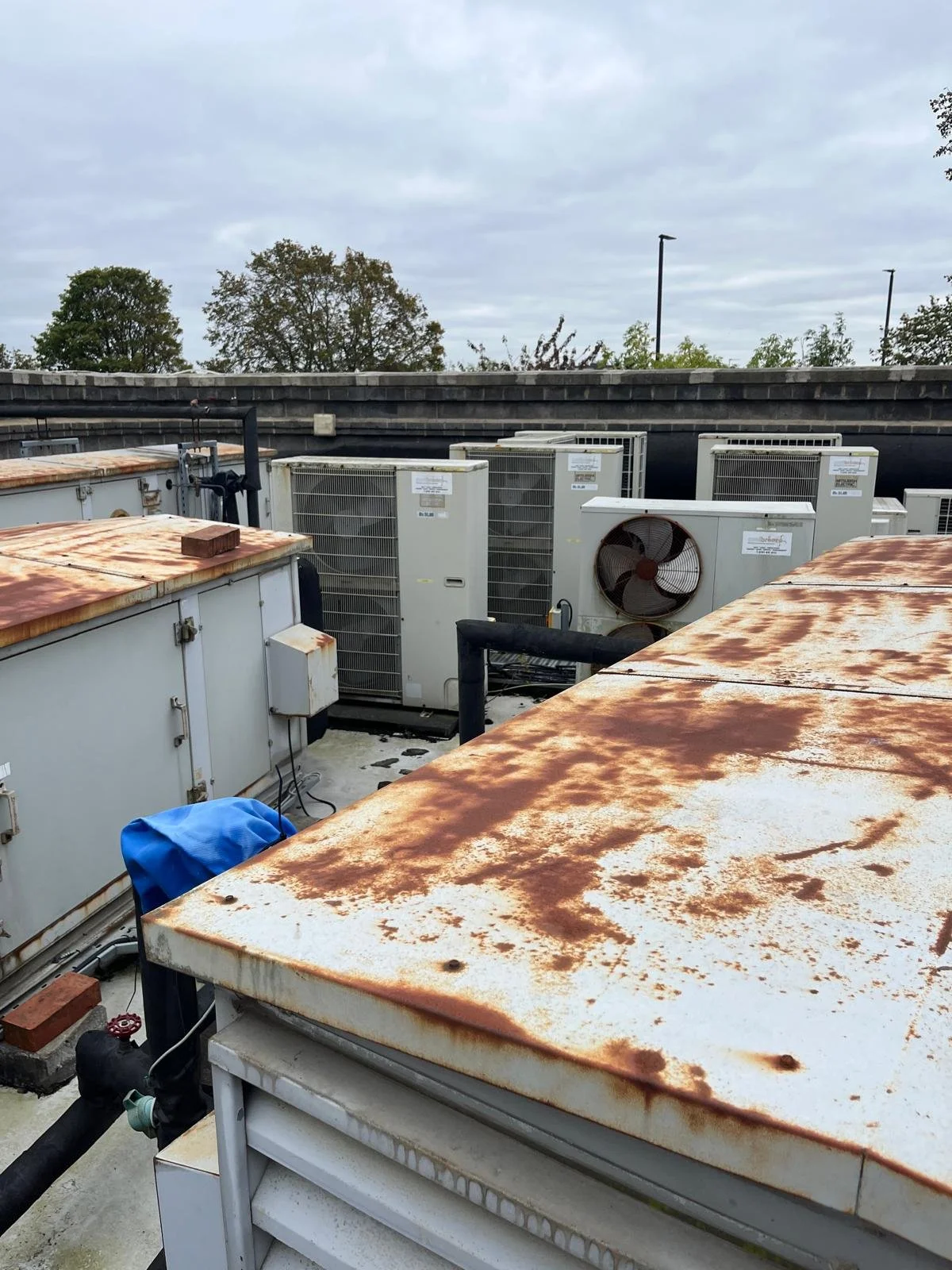
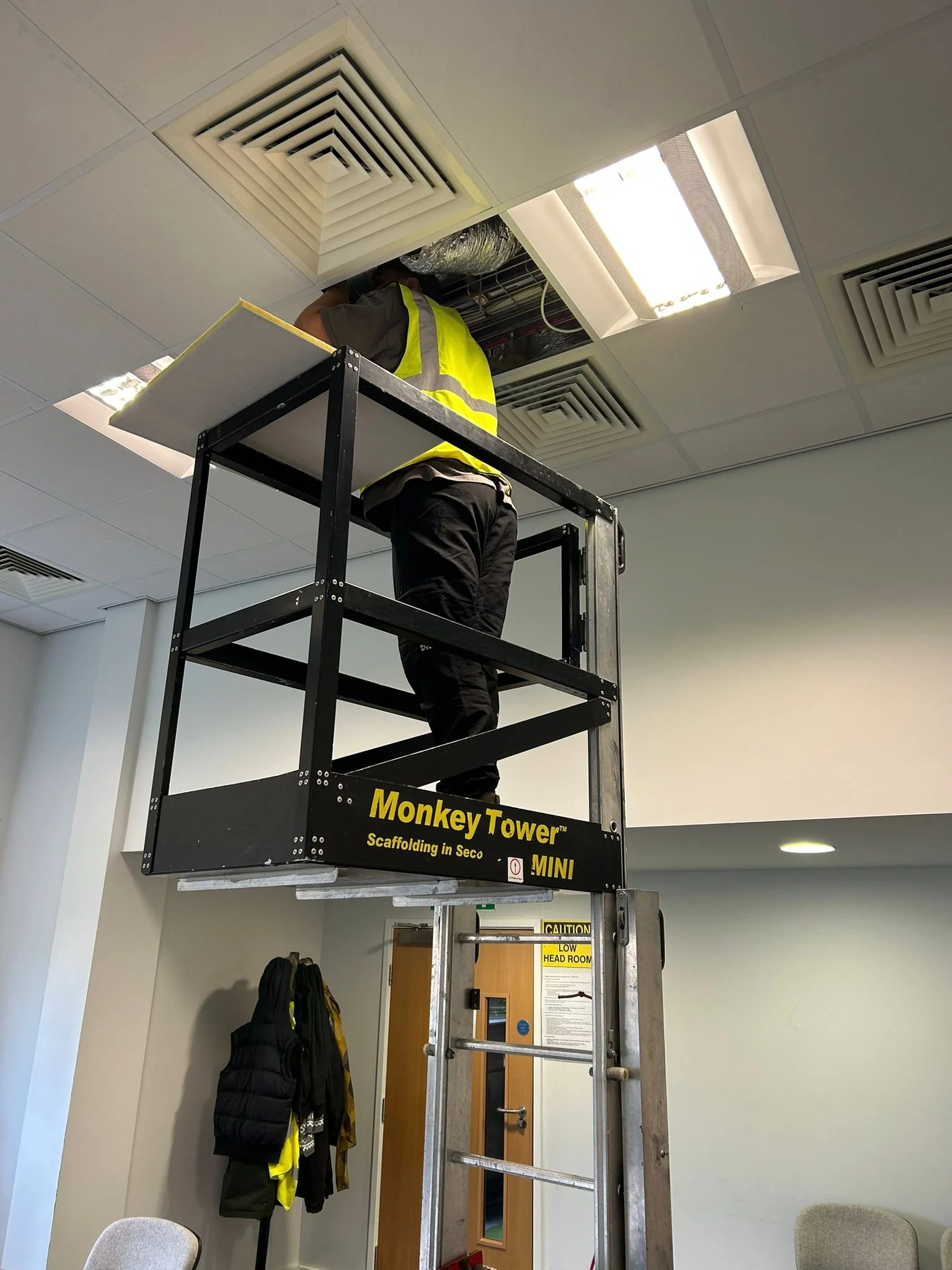
Our approach was guided by a simple principle: understand before intervening. Appointed as Lead Consultant, we began with detailed intrusive surveys to establish a clear, evidence-led understanding of the existing building services infrastructure, not only its condition, but its long-term potential. This allowed informed decisions on what could be retained, adapted, or enhanced as part of a future-ready upgrade strategy.
Early insight created opportunity. By identifying viable pipework, cable containment, and drainage connections, we avoided unnecessary replacement while maintaining full compliance, performance, and flexibility. Close collaboration with the client supported the development of comprehensive as-fitted drawings, clearly defining site constraints, retained systems, and design intent from the outset.
Building on this robust baseline, we delivered a fully coordinated building services solution integrating a hybrid air source heat pump and gas-fired heating strategy, upgraded electrical infrastructure, new air handling and ventilation distribution systems, and a cloud-based building management and control platform. All designs were developed alongside fully costed specifications and bill-of-quantities estimates, ensuring proposals were deliverable within budget and aligned to procurement strategy.
Health and safety was embedded throughout the process. Comprehensive CDM 2015 documentation was prepared, including a designers’ risk register, hazard elimination records, and a structured approach to managing residual risk. A complete, tender-ready package provided Newcastle City Council with technical certainty, commercial clarity, and a controlled, compliant route from design through to construction
The Outcome
The project transformed an ageing, difficult-to-maintain services installation into a coherent, efficient, and future-ready building services solution. By retaining and repurposing viable infrastructure, unnecessary replacement was avoided, reducing disruption, cost, and embodied carbon while improving system performance and maintainability. The hybrid heating strategy delivered a balanced transition toward lower-carbon operation, supported by modern controls that give the Council greater visibility, flexibility, and long-term operational confidence. Through clear documentation, cost certainty, and a fully developed tender package, the Council was able to move seamlessly from design to delivery with clarity and assurance.
Our Lasting Impact
This upgrade delivered more than modernised building services, it strengthened the foundations of a critical public asset. By enabling Newcastle City Council to renew ageing infrastructure without unnecessary replacement, the project improved performance, reliability, and operational confidence while supporting a responsible transition toward lower-carbon operation. Through careful assessment, intelligent reuse, and future-ready design, the work established a pragmatic model for sustainable refurbishment within live public buildings. The result is infrastructure that supports day-to-day service delivery today, while laying the groundwork for more resilient, efficient, and environmentally responsible public estates in the years ahead